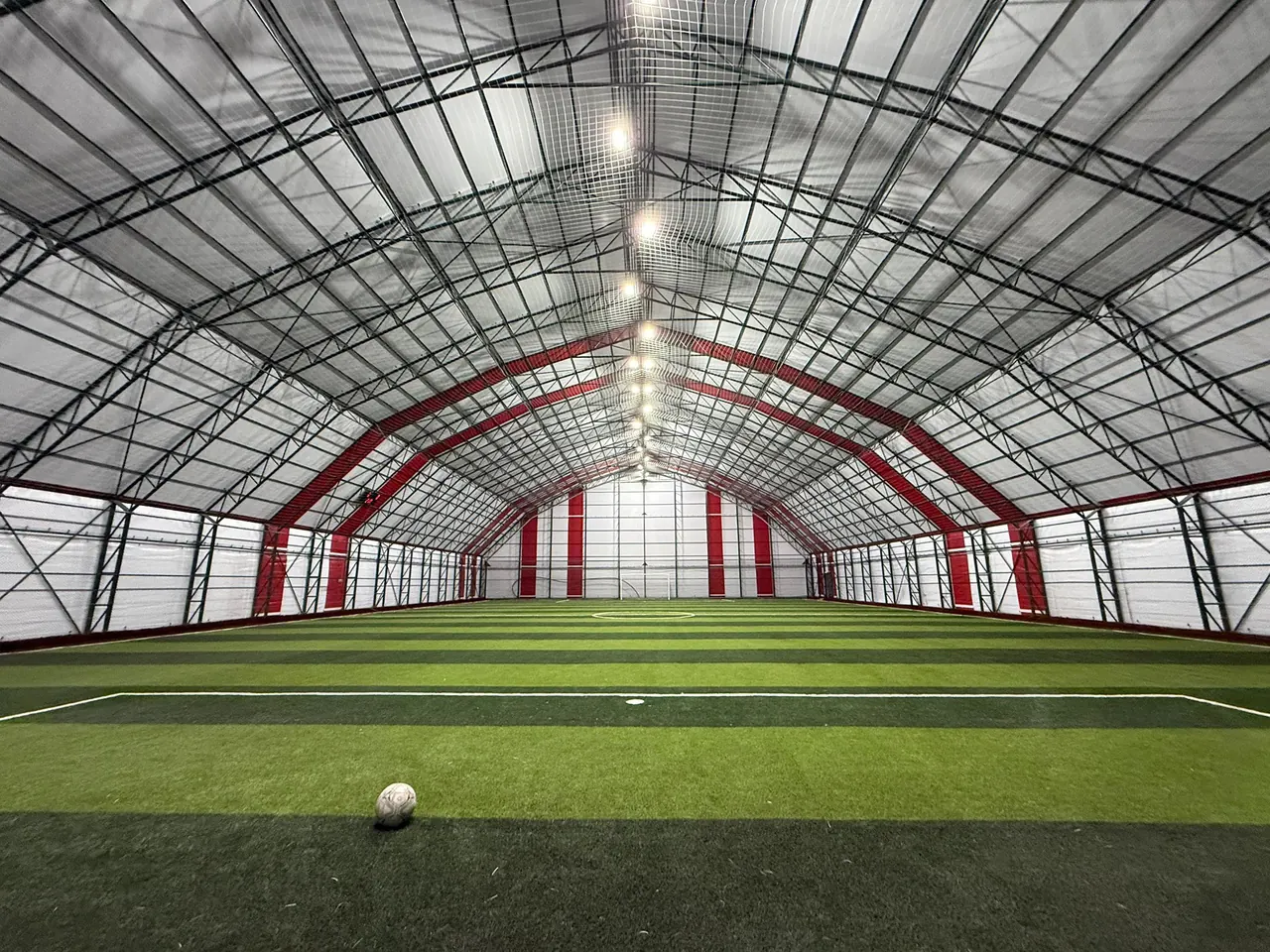
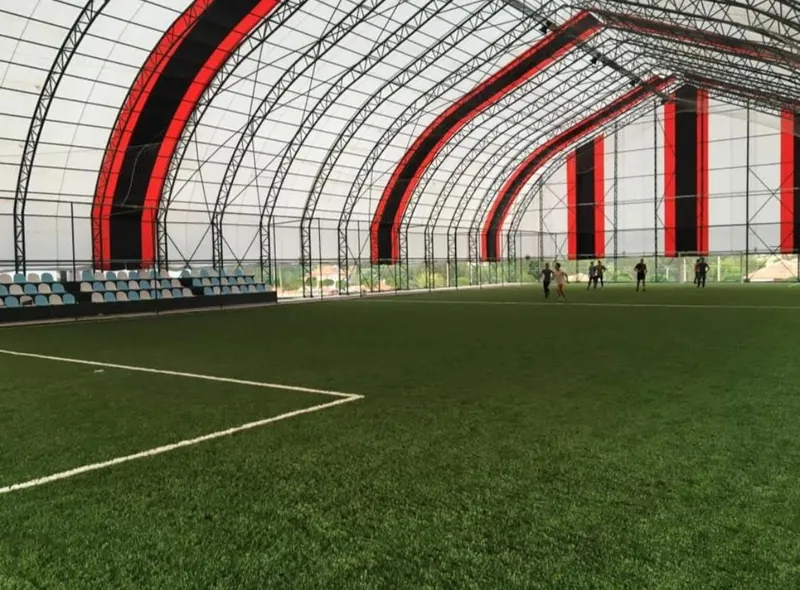
Can an indoor football pitch be operated without heating?
Yes. Because the cover keeps out wind, rain and snow, an unheated hall can be used on winter evenings too; comfort depends on the outdoor temperature and on player expectations. In this model the additional investment for a 30 × 50 m pitch stays at TRY 85,000 – 210,000, and the winter monthly bill is about TRY 15,000 – 28,000. On cold nights, heating the changing rooms and stands separately is far more economical than heating the whole hall.
Is it cheaper to heat an indoor pitch with gas or electricity?
Electricity wins on initial investment, natural gas on running costs. With the sample tariffs, a kilowatt-hour of heat costs TRY 1.80 – 2.40/kWh from natural gas and TRY 4.50 – 5.50/kWh from electricity. For a 30 × 50 m membrane-covered pitch, the winter monthly bill works out at about TRY 87,000 – 186,000 with electric infrared and about TRY 47,000 – 114,000 with gas-fired radiant tubes. Infrared is more economical for a pitch heated for a few hours a day; gas is more economical for a pitch fully booked for long hours.
Does infrared heating work on a membrane-covered pitch?
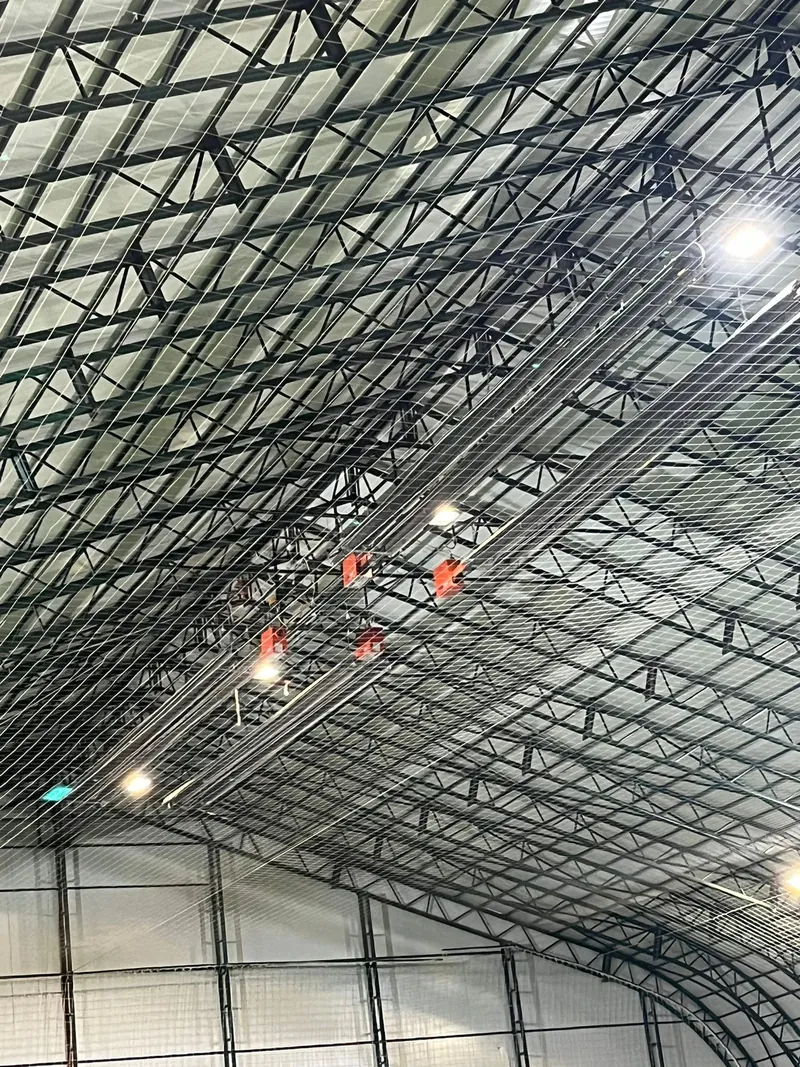
It does, because infrared heats the players and the pitch surface that the radiation reaches, not the air. Under a single-layer membrane, heating the air loses most of the heat through the cover, while radiant heating is far less affected by that loss. The heaters should be distributed evenly over the playing area and fitted with protective guards or positioned above the ceiling net to protect them from ball strikes.
Why does a warm air unit heater burn more gas on an indoor pitch?
Warm air is lighter and rises to the roof; in a high-ceilinged hall, player level stays cool while the warmest air collects just under the cover and is lost from there. The same comfort therefore needs a higher installed capacity than a radiant system: the example assumes 150 – 250 kW for unit heaters and 100 – 150 kW for radiant tubes. Destratification fans close part of this gap by pushing warm air back down.
How do you stop water dripping from the roof of an indoor pitch?
Dripping is humid indoor air condensing on the cold surface of the cover. The solution has three steps: remove moisture with sensor-controlled exhaust fans, plan air inlets low and outlets high, and avoid open-flame heaters. The permanent solution is a double-layer membrane or an insulated cover that raises the inner surface temperature.
How do you prevent mould and odour in indoor artificial turf?
The infill needs to dry. Ventilating the hall hard for a short time after the last session, limiting wet shoes at the entrance with mats and grilles, and aerating the infill by brushing all prevent odour. Areas with weak airflow, such as corners and the space behind the goals, should be checked separately during maintenance.
How much electrical capacity does a heated indoor pitch need?
On the example 30 × 50 m pitch, LED lighting accounts for 8 – 12 kW and exhaust fans for 3 – 6 kW. Adding electric infrared heating raises the total installed load to 101 – 138 kW, a level that usually requires an application to increase the contracted capacity. Whether a transformer is needed, and the connection terms, are confirmed by the electricity distribution company. With a gas-fired system, electrical demand stays at lighting and fan level.
Can heating be added to an indoor pitch later?
Yes, but the structure must first be checked to confirm that it can carry the load of the heaters. For gas, the internal piping route and flue outlets are redesigned; for electricity, the switchboard capacity. Even if you do not install heating in the first phase, allowing for suspension points and the cable or gas route in the construction design avoids extra steel and dismantling costs later.
How can I calculate the monthly energy cost of my own indoor pitch?
Multiply the installed capacity of each appliance (kW) by its daily running hours and by the number of days in the month; for electrical appliances, multiply the result by the tax-inclusive kWh unit rate on your bill. For gas appliances, divide the kilowatt-hours by the energy content of 1 m³ of natural gas (10 kWh) to convert them to cubic metres, then multiply by the price per m³. Because heaters cycle on and off under thermostat control, use the full-load equivalent time rather than clock hours.
What reduces heating costs most on an indoor pitch?
Cover insulation, zoned heating and a timer linked to bookings. In the example, an insulated sandwich panel saves TRY 48,600 – 129,600 over one winter season with the same radiant system. Zoning and timers eliminate heating empty stands and empty hours; the three measures complement each other.